About Holon Gardens
Acerca de Holon Gardens
Su Holon Gardens
From collective cognition to the front yard. Our story, team, and commitment to transparency and ecological stewardship.
Our Story
Nuestra Historia
La Nostra Storia
From Research to Practice
Holon Labs began as a research inquiry into collective cognition—how groups of individuals can think, adapt, and evolve together as a coherent whole. The question was fundamental: what are the conditions under which collective intelligence emerges?
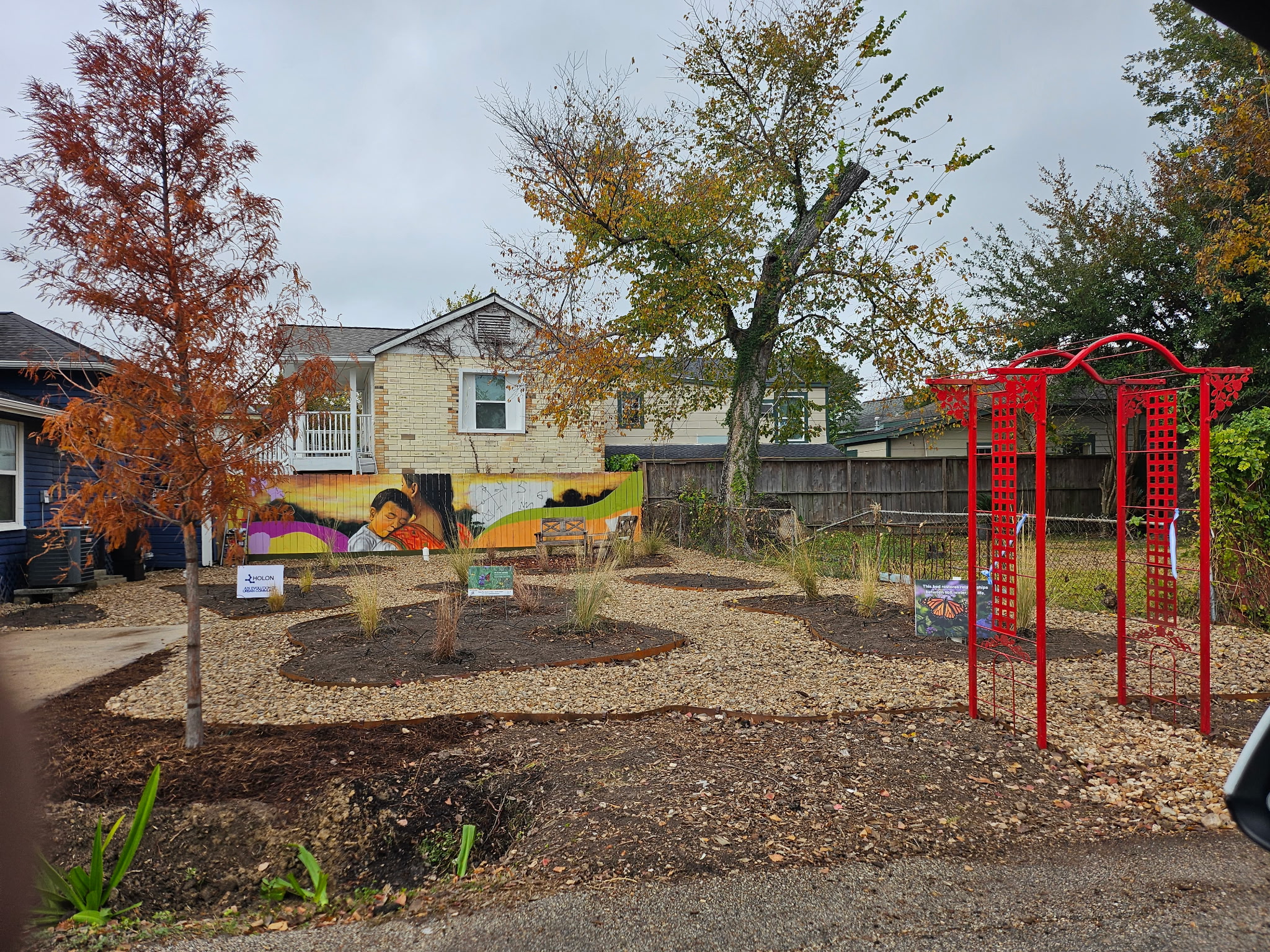
The answer turned out to be surprisingly concrete. Collective cognition requires shared material practice—not ideology, not abstract agreement, but the physical act of co-creating something living together. The garden became the laboratory. The front yard became the thesis.
Holon Gardens: Applied Expression
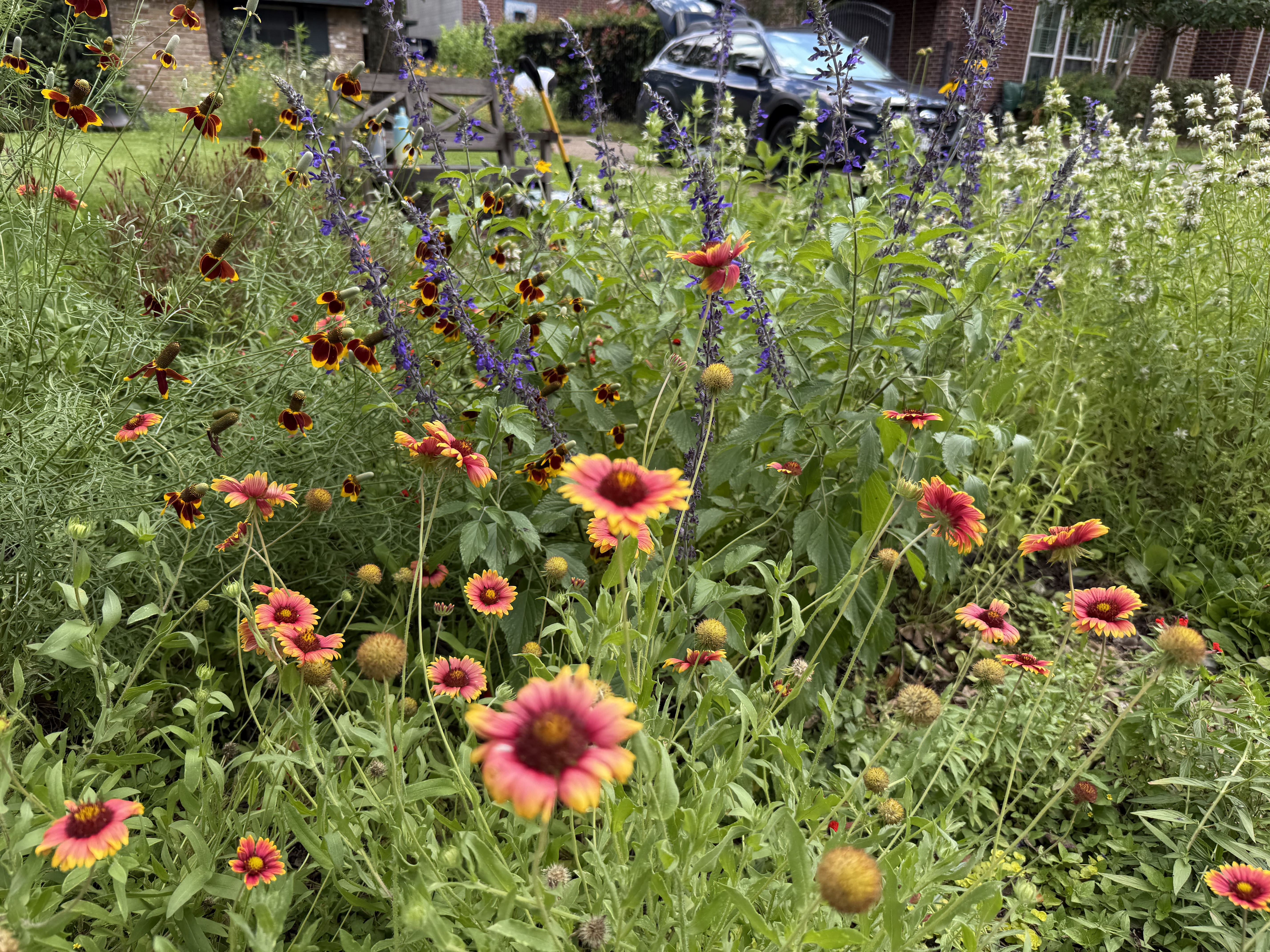
Holon Gardens is the applied expression of this research. Every micro-sanctuary is a "collective computer"—a node in a distributed network where ecological data, social connection, and cultural meaning are produced simultaneously. The gardening is the computing.
Our vision is not centered on the landscaping industry. It is about the cascading impact of front yard transformation across ecology, society, culture, economy, and political systems. The landscaping industry is merely the terrain where we are proving that a non-profit model can outperform extraction.



Leadership Team
Equipo de Liderazgo
Team di Leadership
A team of researchers, ecologists, architects, and systems engineers dedicated to micro-conservation.
Esteban Montero
Founder, President & Executive Director
Researcher in collective cognition and systems engineering. Previously founded Holon Games.
Scott Barnes
Chief Curator & Ecologist
Leading ecological design and native plant curation for Texas ecotypes.
Tomás Folch
Chief Landscape Architect
Harvard GSD Landscape Architect & Kiley Fellow; Co-Director, CEPU at Universidad Adolfo Ibáñez.
Board of Directors
Our Board provides fiduciary oversight and strategic guidance. Board members serve three-year staggered terms with a maximum of two consecutive terms.
Community Impact
Impacto Comunitario
Impatto Comunitario
Real-time metrics from our network of micro-conservation stewards.
Governance & Transparency
Gobernanza y Transparencia
Governance e Trasparenza
As a 501(c)(3) nonprofit, Holon Foundation is committed to the highest standards of transparency, accountability, and ethical governance.
Governance Structure
Holon Foundation operates as a 501(c)(3) organization with an independent Board of Directors providing fiduciary oversight. Our governance model separates corporate rights from the board's operational authority, ensuring independent decision-making that serves the public interest.
At least two-thirds of board seats held by individuals with no financial or familial relationship to the sole member.
Directors serve three-year terms with a maximum of two consecutive terms, ensuring regular board renewal.
Audit and Governance committees are chaired by independent directors.
All governance documents, Form 990, and board meeting summaries are published on this website.
Multidimensional Responsibility
Our governance framework recognizes nine dimensions of organizational responsibility.
Global Governance Framework Alignment
Holon Foundation aligns its governance practices with leading international frameworks to ensure cross-border credibility and best-practice standards. We believe that governance excellence requires learning from the best models worldwide.
UK Charity Governance Code 2025
The newly revised UK Code uses an "apply or explain" approach with eight core principles including Foundation, Leadership, Ethics & Culture, Decision Making, and Board Effectiveness.
Holon Alignment: Our onboarding, ethics policies, and board self-evaluation framework directly implement these principles.
charitygovernancecode.org →IBGC Code of Best Practices (Latin America)
The Brazilian Institute of Corporate Governance's 6th edition Code emphasizes that governance is for all stakeholders. It uses a "comply or explain" philosophy applicable to associations and nonprofits.
Holon Alignment: Our multi-stakeholder accountability model serves stewards, donors, community, and the public equally.
IBGC 6th Edition →INPAS (Asia-Pacific)
The International Non-Profit Accounting Standard, launched by the International Non-Profit Reporting Foundation, provides the first global accounting framework for nonprofits.
Holon Alignment: Our financial reporting practices aim to align with INPAS principles for consistent, transparent disclosure.
INPAS Overview →IRS Governance Practices
IRS guidance for 501(c)(3) organizations requires documented conflict-of-interest processes, public inspection access, and governance disclosure on Form 990.
Holon Alignment: Our Ethics & Conflict of Interest Policy, Whistleblower Policy, and annual disclosure processes meet all IRS requirements.
IRS Governance Guide →Additional References
The following external resources are provided for informational purposes only. Holon Foundation does not own, control, or endorse these third-party organizations or their content. Their inclusion here reflects our commitment to transparency and our appreciation for governance practices we consider exemplary in the nonprofit and conservation sectors.
Our Approach: Micro-Conservation Governance
Holon Foundation is not a traditional land conservation organization. Born from systems engineering and first-class industry experience, our distributed micro-conservation model represents a pattern-breaking approach to environmental stewardship. The following comparison illustrates why we engineer purpose-built governance frameworks — designed for the inflection point where technology, community agency, and ecological urgency converge.
| Dimension | Traditional Land Conservation | Holon Foundation (Micro-Conservation) |
|---|---|---|
| Scale | Large contiguous parcels (hundreds to thousands of acres) | Composable network of distributed urban micro-parcels — each a "holon" that functions independently yet integrates into a continuous ecological fabric, engineered for emergent scale |
| Stewardship | Professional land managers employed by the organization | Stigmergic coordination: community stewards self-organize through indirect signals and peer support — a decentralized labor model inspired by natural systems, not institutional hierarchy |
| Verification | Professional site inspections and monitoring programs | Multi-layered trust engine: peer verification with algorithmic credibility scoring, professional verifier oversight, and a "physics engine" where claims must map rigorously to observable reality |
| Impact | Standardized ecological surveys on managed lands | Eight-dimensional impact engine (water, carbon, heat, noise, biodiversity, economic, social, provenance) built on quantitative modeling from enterprise-grade systems engineering |
| Governance Risk | Donor restrictions on land use; conservation easement enforcement | Technology-mediated trust at scale: distributed credibility graphs, verifier integrity protocols, and transparent data pipelines — governance as a living system with built-in self-correction |
| Stakeholders | Donors, government agencies, adjacent landowners | Multi-stakeholder ecosystem: garden stewards, neighbors, donors, verifiers, community leaders, and partner organizations — each with defined roles in a new social contract for conservation |
| Technology | GIS mapping, monitoring equipment, field surveys | Full-stack digital nervous system: Trust Portal, mobile verification, real-time impact dashboards, and a unified governance platform — collective computing infrastructure designed for ecological integrity |
| Regulation | Conservation easement law, environmental regulations, federal land management | Standard 501(c)(3) compliance layered with emerging micro-conservation policy frameworks and community governance protocols — pioneering the regulatory landscape for distributed conservation |
This comparison informs our governance design: we cannot simply adopt templates from traditional land trust organizations built for centralized conservation models. The challenges of our time demand that we expand and revise our civilization's understanding of both trust and conservation. Trust is not a static credential — it is a living, relational system that must be continuously cultivated, much like the ecosystems we steward. Conservation is not merely the preservation of land in amber; it is the active nurturing of relationships between people, place, and the living world. We build governance systems for this expanded vision: distributed stewardship, community-driven verification, and technology-mediated trust as the foundation of a perennial organization.
Read more about our philosophy: Holon Substack →
Governance Documents & Policies
The following governance documents are publicly available for download. They demonstrate Holon Foundation's commitment to transparency and accountability. All documents are reviewed and updated annually by the Governance Committee.
Core Governance Protocols
Anonymous Whistleblower Reporting
If you wish to report a concern anonymously, you may use our secure reporting form. No login or personal identification is required. All reports are reviewed within 5 business days in accordance with our Whistleblower Protection Policy.
Submit Anonymous ReportYou may also report by mail: Holon Foundation, Attn: Whistleblower Committee, or by email to info@holonfoundation.org
Operational Policies
Mission & Compliance Policies
Internal Governance Documents
The following documents are maintained internally and available to board members through the Governance sub-module at holonfoundation.app:
Nonprofit Information
Información de Organizaciones sin Fines de Lucro
Informazioni Organizzazioni Non Profit
501(c)(3) Status
Holon Foundation is a tax-exempt organization as described in section 501(c)(3) of the Internal Revenue Code.
Tax ID (EIN): 99-0563228
Legal Name: Holon Foundation dba Holon Gardens
Financial Transparency
Holon Foundation manages its finances and governance through our proprietary Holon Financial Management System, an integrated platform designed for full transparency and accountability in nonprofit operations.
Our annual Form 990 and financial statements are available upon request. If you would like additional information about our finances, governance, or operations, please use the form below.
Public Financial Documents
In keeping with our commitment to transparency, the following documents are available for review:
Annual information return.
Revenue, expenses, and program allocation.
Documents are typically provided within 10 business days of request.